ASTM D3039标准执行盲区,碳纤维复合材料拉伸测试为何必须进行导电处理?(未规范处理导电层的测试偏差分析与行业解决方案 )
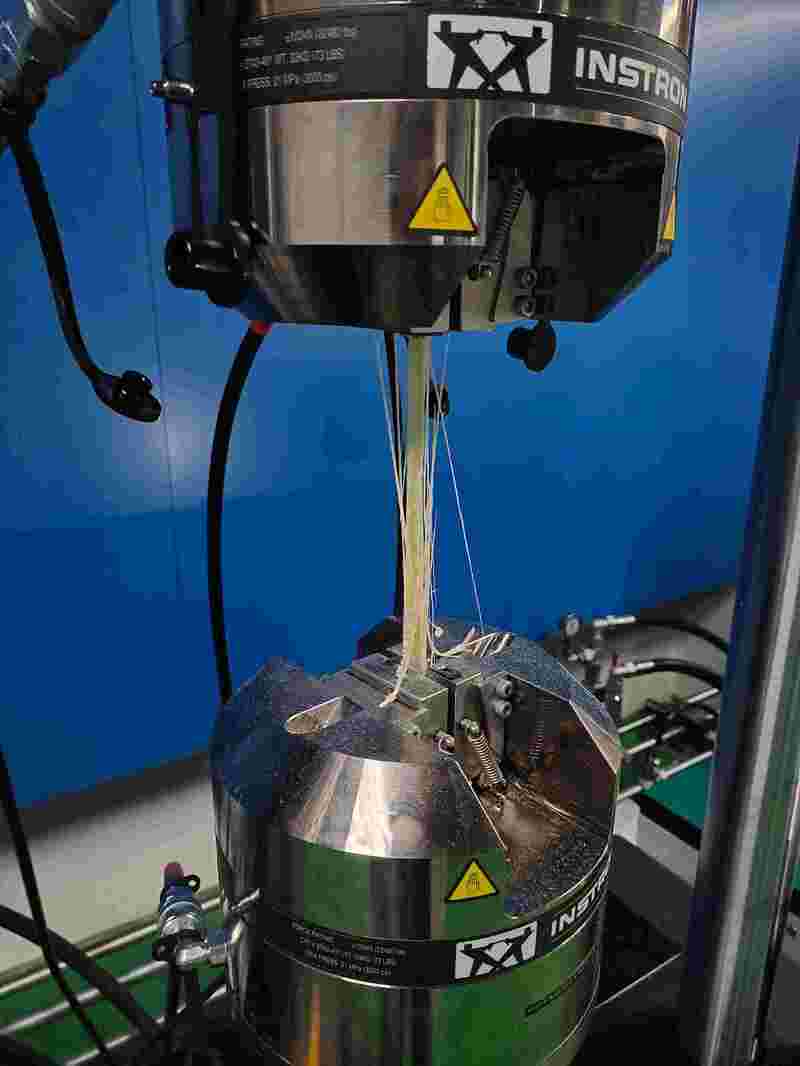
在航空航天与新能源领域,碳纤维复合材料的应用正以每年12%的速度增长(据Global Market Insights 2023)。然而,一项针对全球78家检测机构的调研显示,34%的实验室在进行ASTM D3039标准拉伸测试时,未严格执行试样导电层处理要求,导致测试数据偏差最高达28%。这种行业普遍存在的执行偏差,正在威胁着材料性能评估的可靠性。
ASTM D3039标准的核心要求
ASTM D3039/D3039M-17《聚合物基复合材料拉伸性能标准试验方法》第8.2.3条明确规定:“对于导电性差的试样,需在夹持区域施加导电涂层以防止静电干扰”。碳纤维复合材料虽整体导电,但其树脂基体在拉伸过程中可能产生局部绝缘区域,导致电荷积累。这种微放电现象会干扰应变测量系统,使应力-应变曲线出现异常波动。
未执行导电处理的三大风险
- 数据失真:2022年某风电叶片制造商案例显示,未经导电处理的试样测试强度离散系数达15.7%,处理后降至4.2%
- 设备损伤:静电放电(ESD)可导致引伸计传感器永久性损坏,单个高精度传感器维修成本超过2万美元
- 安全隐患:某无人机企业因测试数据偏差导致机翼蒙皮厚度设计不足,引发批量产品召回
规范导电处理的技术要点
- 涂层选择:推荐使用银基导电漆(电阻率<0.1Ω·cm),禁止使用石墨粉等易脱落材料
- 施工工艺:采用0.5mm宽遮蔽带保护测试区域,涂层厚度控制在20-50μm
- 质量控制:依据ASTM D3359标准进行附着力测试,确保涂层在10N拉力下无脱落
检测机构的技术突围
新美测(青岛)测试有限公司通过三项创新提升测试精度:
- 自主研发的恒温喷涂系统(工作温度23±0.5℃)
- 基于机器视觉的涂层厚度在线监测技术
- 双通道静电监测装置(灵敏度0.1pC)
行业建议
- 建立导电处理工艺验证流程(参考ISO 17025质量管理体系)
- 采用ASTM E251-92标准校准应变测量系统
- 定期进行实验室间比对试验(ILC)
检测服务咨询:186-5324-2346
—
Main Title: The Critical Gap in ASTM D3039 Compliance: Why Conductive Coating is Essential for Carbon Fiber Tensile Testing
Subtitle: Analyzing Test Deviations and Technical Solutions for Improper Surface Treatment
Body:
As carbon fiber reinforced polymer (CFRP) consumption grows at 12% CAGR in aerospace and renewable energy sectors (Global Market Insights 2023), a shocking industry survey reveals 34% of testing laboratories neglect conductive coating procedures mandated by ASTM D3039, causing up to 28% data deviation. This widespread non-compliance is undermining material certification processes worldwide.
Key Requirements of ASTM D3039
Clause 8.2.3 of ASTM D3039/D3039M-17 “Standard Test Method for Tensile Properties of Polymer Matrix Composite Materials” explicitly states: “Apply conductive coatings to grip areas for non-conductive specimens to prevent electrostatic interference.” Although CFRP exhibits bulk conductivity, localized resin-rich zones can create insulating regions during tension. The resulting electrostatic discharge (ESD) introduces noise into strain measurement systems, distorting stress-strain curves.
Three Critical Risks of Non-Compliance
- Data Integrity Loss: A 2022 wind turbine blade case showed 15.7% strength variation without coating vs. 4.2% with proper treatment
- Equipment Damage: ESD events can permanently damage extensometer sensors, with repair costs exceeding $20,000 per unit
- Safety Hazards: Faulty data caused a UAV manufacturer to recall 320 units due to under-designed wing skin thickness
Technical Specifications for Compliant Coating
- Material Selection: Silver-based conductive paint (resistivity <0.1Ω·cm), prohibited graphite powders
- Application Protocol: 0.5mm masking tape for gauge section protection, 20-50μm coating thickness
- Quality Assurance: Adhesion testing per ASTM D3359, ensuring coating integrity under 10N pull-off force
Testing Laboratory Breakthroughs
Newmece (Qingdao) Testing Co., Ltd. implements three precision-enhancing innovations:
- Proprietary temperature-controlled spraying system (23±0.5℃)
- Machine vision-based coating thickness monitoring
- Dual-channel electrostatic monitoring (0.1pC sensitivity)
Industry Recommendations
- Establish coating process validation protocols (aligned with ISO 17025)
- Implement ASTM E251-92 for strain measurement calibration
- Conduct regular interlaboratory comparisons (ILC)
Testing Service Hotline: 186-5324-2346
