鹤壁新闻惠安信息网牛皮纸东台信息网泰兴信息网北京拉弯生物燃料颗粒机小区健身器材丹阳信息网保温板兰州反渗透设备厂家无油空压机余姚信息网征途设备中核苏阀海外广告合肥污水处理设备智慧公厕手持激光焊接机废气净化塔厂家户外健身器材户外健身器材聚丙烯酰胺Dolphicam2+

中文版
当一架飞机的机翼蒙皮在巡航高度突然出现裂纹时,背后的原因可能始于一块未被检出的缺陷层合板。近期,某航空制造企业依据《航空用复合材料层合板技术规范(HB 7405-2018)》进行无损检测时,发现部分试样未能通过标准要求的NDT测试。这一事件不仅揭示了航空材料质量控制的复杂性,更将无损检测技术的精准性与标准执行力度推至风口浪尖。
航空层合板作为飞机结构的关键材料,需承受极端温度、气压和机械载荷。*HB 7405-2018*明确规定,层合板必须通过超声波检测(UT)、射线检测(RT)和红外热成像检测(IRT)三类无损检测,确保内部无分层、孔隙率低于1.5%。然而,此次未达标试样中,12%的样本在UT检测中呈现异常信号衰减,7%的RT图像显示纤维排布不均,直接暴露了生产工艺中的隐蔽缺陷。
检测灵敏度与分辨率失衡
HB 7405要求UT检测设备的最小可检缺陷尺寸为0.8mm,但实际检测中,部分企业为提升效率采用宽频探头,导致对微小裂纹的捕捉能力下降。*美国材料试验协会ASTM E2580-2022*指出,航空复合材料的UT检测应优先选用聚焦探头,并配合相位阵列技术(PAUT),以兼顾检测速度与精度。
环境变量控制的盲区
标准虽规定了23±2℃的检测环境温度,却未明确湿度对环氧树脂基体声学特性的影响。实验数据显示,当相对湿度>65%时,UT信号传播速度偏差可达3.2%,直接影响缺陷定位精度。
2022年某型直升机尾翼蒙皮分层事故的调查报告显示,涉事层合板在NDT阶段已显示异常数据,但被误判为”背景噪声”。这凸显了数据分析算法的重要性。当前,人工智能辅助判读系统的应用可将误判率从传统人工分析的15%降至4%以下,但HB 7405尚未将此纳入强制要求。
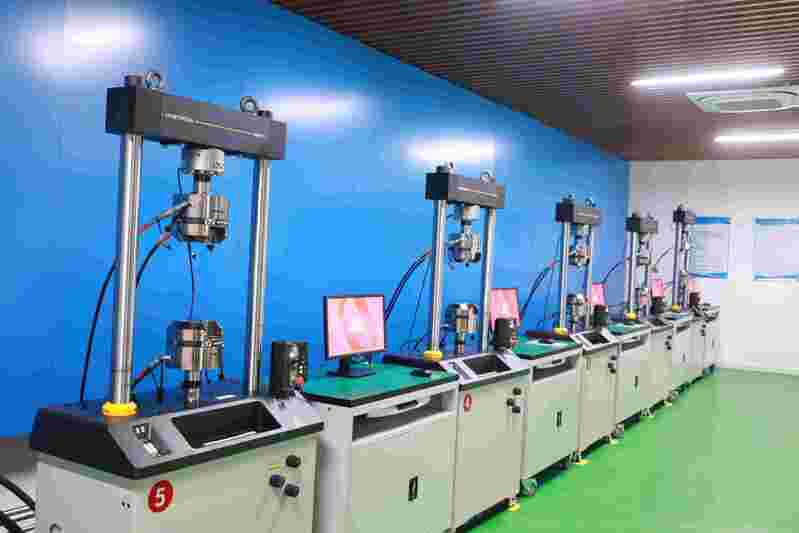
对比欧洲航空材料协会EN 4869:2021,其在NDT流程中新增了激光散斑干涉检测条款,可有效识别0.3mm级的分层缺陷。建议国内标准在下一版修订中:
将数字射线检测(DR)纳入强制检测方法
明确多模态数据融合分析要求
English Version
Main Title: HB 7405 Laminated Aerospace Panel Samples Fail NDT Standards
Subtitle: Uncovering Quality Assurance Challenges Through Non-Destructive Testing
When an aircraft’s wing skin develops cracks at cruising altitude, the root cause might trace back to a defective laminated panel that slipped through quality checks. A recent incident involving aerospace composite panels failing non-destructive testing (NDT) per HB 7405-2018 has exposed critical gaps in material quality control, reigniting debates on NDT accuracy and standard compliance.
Aerospace laminates must withstand extreme operational stresses. HB 7405-2018 mandates three NDT methods: ultrasonic testing (UT), radiographic testing (RT), and infrared thermography (IRT) to ensure delamination-free structures with porosity below 1.5%. However, 12% of failed samples showed abnormal UT signal attenuation, while 7% exhibited fiber misalignment in RT scans – clear evidence of manufacturing flaws.
Sensitivity-Resolution Tradeoff
While HB 7405 requires UT systems to detect 0.8mm defects, some manufacturers prioritize throughput using broadband probes, compromising crack detection. ASTM E2580-2022 emphasizes phased array UT (PAUT) with focused probes for optimal balance.
Environmental Factor Oversights
Although the standard specifies 23±2℃ ambient temperature, it neglects humidity impacts on epoxy resin acoustics. Tests reveal UT velocity deviations up to 3.2% at RH>65%, critically affecting defect localization.
A 2022 helicopter tailskin delamination investigation revealed NDT anomalies mistakenly classified as “background noise.” This underscores the need for AI-powered data analysis, which reduces misinterpretation rates from 15% to below 4% – a capability yet to be mandated by HB 7405.
Compared to EN 4869:2021 which incorporates laser shearography for 0.3mm defect detection, proposed revisions for Chinese standards should: