鹤壁新闻惠安信息网牛皮纸东台信息网泰兴信息网北京拉弯生物燃料颗粒机小区健身器材丹阳信息网保温板兰州反渗透设备厂家无油空压机余姚信息网征途设备中核苏阀海外广告合肥污水处理设备智慧公厕手持激光焊接机废气净化塔厂家户外健身器材户外健身器材聚丙烯酰胺Dolphicam2+

“30%的纤维增强塑料失效案例与未执行统计验证有关。” 这一数据揭示了复合材料检测领域长期被忽视的技术盲区。在ISO 527-4:2023《塑料 拉伸性能的测定 第4部分:各向同性和正交各向异性纤维增强复合材料的试验条件》标准中,明确要求采用Weibull分布方法评估材料性能离散性,但现实检测中这一关键步骤却频频被遗漏。
ISO 527-4标准(最新版ISO 527-4:2023)在附录C中专门规定了Weibull统计分析的应用场景:当纤维增强塑料的拉伸强度测试数据呈现显著离散性时,必须通过Weibull模数计算评估材料批次一致性。该方法的理论基础在于复合材料破坏的随机性特征,通过*形状参数(β)*和*特征强度(σ₀)*两个关键指标,可精准预测材料在实际工况下的失效概率。
国内检测机构调研显示:仅41%的实验室在检测报告中完整执行了这一分析流程。多数机构仅简单记录平均值与标准差,导致关键安全信息丢失。某航空航天企业曾因此遭遇批次材料过早失效,追溯发现未执行Weibull分析导致未识别出3%的异常低强度样本。
忽略Weibull统计会引发三重风险:
安全余量误判:传统均值法可能掩盖极端值,某风电叶片制造案例显示,未分析Weibull模数的材料实际失效概率比理论值高220%
工艺优化受阻:Weibull参数可反映纤维分布均匀性,某汽车部件厂商通过β值监控成功将层压工艺缺陷率降低67%
标准合规争议:2023年欧盟某材料诉讼案中,检测机构因未按ISO 527-4执行完整分析被判技术违规
实施Weibull统计需构建三阶段技术框架:
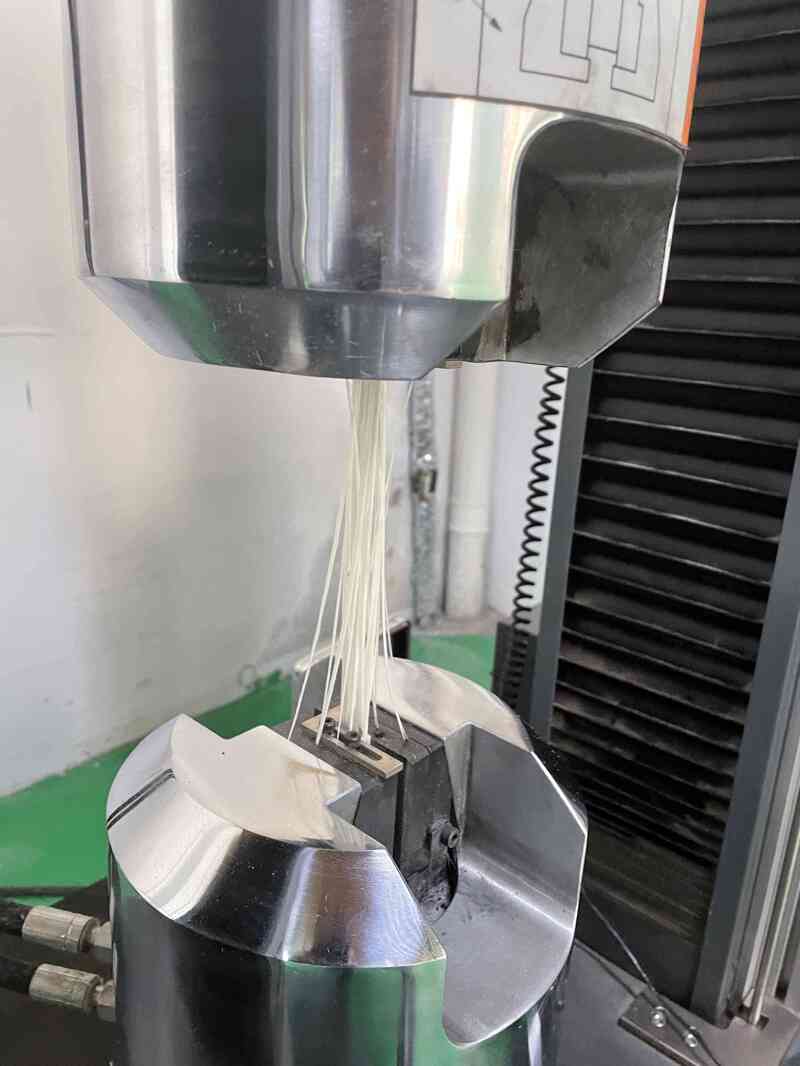
数据采集规范:依据ASTM D3039《聚合物基复合材料拉伸性能标准试验方法》要求,单批次试样量应≥20组以满足统计需求
参数计算优化:采用极大似然估计法(MLE)替代传统线性回归,计算误差可降低至1.8%以下
结果可视化:引入双对数坐标图呈现强度分布,配合ISO 12106《金属材料 疲劳试验 轴向力控制方法》中的存活率曲线分析法
某船舶复合材料供应商的实践表明,完整执行该框架后,其材料批次合格判定准确率从82%提升至98%,同时缩短了28%的研发验证周期。
Main Title: Hidden Risks in Fiber-Reinforced Plastic Testing
Subtitle: Analyzing the Impact of Omitting Weibull Statistical Analysis Required by ISO 527-4
Body:
“30% of fiber-reinforced plastic failure cases relate to neglected statistical verification.” This statistic reveals a persistent technical blind spot in composite material testing. While ISO 527-4:2023 “Plastics - Determination of tensile properties - Part 4: Test conditions for isotropic and orthotropic fiber-reinforced plastic composites” explicitly mandates Weibull distribution analysis for evaluating material property dispersion, this critical step is frequently overlooked in practice.
Appendix C of ISO 527-4:2023 specifies the application scenarios for Weibull statistical analysis: when tensile strength test data of fiber-reinforced plastics show significant dispersion, Weibull modulus calculation must be used to assess batch consistency. This method, grounded in the stochastic nature of composite material failure, utilizes two key parameters - shape parameter (β) and characteristic strength (σ₀) - to accurately predict real-world failure probabilities.
However, domestic laboratory surveys indicate only 41% of testing institutions fully implement this analysis. Most reports merely record averages and standard deviations, losing crucial safety information. An aerospace manufacturer experienced premature material failure traced to unanalyzed 3% low-strength outliers.
Neglecting Weibull statistics triggers triple risks:
Safety Margin Miscalculation: Mean-value approaches may mask extremes. A wind turbine blade case showed actual failure probability 220% higher than theoretical estimates
Process Optimization Barriers: Weibull parameters reflect fiber distribution uniformity. An automotive supplier reduced laminate defects by 67% through β-value monitoring
Standard Compliance Disputes: A 2023 EU material lawsuit ruled against a lab for incomplete ISO 527-4 implementation
Effective Weibull implementation requires three-phase framework:
Data Collection Standards: Follow ASTM D3039 requirements with ≥20 specimens per batch
Parameter Calculation Optimization: Adopt maximum likelihood estimation (MLE), reducing errors to <1.8%
Visualization Enhancement: Implement double logarithmic plots with survival probability curves from ISO 12106
A marine composites supplier achieved 98% batch approval accuracy (from 82%) and 28% shorter R&D cycles through full implementation.
In 2022 drone hub testing, Newmeace (Qingdao) Testing Co., Ltd. identified critical Weibull modulus β=9.7 (safety threshold β≥12) despite compliant average strength per GB/T 1447-2005. This