鹤壁新闻惠安信息网牛皮纸东台信息网泰兴信息网北京拉弯生物燃料颗粒机小区健身器材丹阳信息网保温板兰州反渗透设备厂家无油空压机余姚信息网征途设备中核苏阀海外广告合肥污水处理设备智慧公厕手持激光焊接机废气净化塔厂家户外健身器材户外健身器材聚丙烯酰胺Dolphicam2+

当一家航空部件制造商因0.15秒的加载速度偏差导致整批碳纤维支架报废时,ISO 14125标准中的±10%速率允差条款突然变得无比真实。这个看似微小的数值波动,实则决定着材料性能数据的法律效力和产品安全边界。作为纤维增强塑料弯曲性能测试的核心标准,ISO 14125:1998《纤维增强塑料复合材料 弯曲性能的测定》通过精准控制加载速率,确保全球实验室产出可比、可信的弹性模量与弯曲强度数据。
ISO 14125明确规定:“试验机压头移动速率应保持恒定,偏差不超过设定值的±10%”。这个精确要求源于材料力学响应的应变率敏感性——以碳纤维/环氧树脂层合板为例,当加载速率从2 mm/min升至2.2 mm/min时,其弯曲强度可能产生3-5%的离散,远超ASTM D790标准规定的1%实验允差。
某第三方实验室的对比测试显示:在检测某型号GFRP板材时,1.8 mm/min的实际速率(标称值2 mm/min)导致弯曲模量测定值降低7.8%,直接触发EN 13706-2标准的符合性争议。这印证了ISO 14125第6.3条强调的“速率稳定性优先于绝对值精度”原则——即便初始设定存在微小偏差,只要全程波动控制在±10%带宽内,仍视为有效测试。
满足ISO 14125的速率控制要求,需要三级技术保障体系:
伺服闭环控制系统(参照JJG 475-2008《电子万能试验机检定规程》)确保0.5级精度
激光测速装置(符合ISO 9513:2012《金属材料 单轴试验用引伸计系统的标定》)实现实时反馈
数字滤波算法(基于IEC 61131-3编程标准)消除机械振动干扰
某检测机构的实测数据显示:采用压电陶瓷驱动系统的试验机,在10 N/s加载模式下,速率波动可控制在±0.8%,较传统液压系统提升5倍稳定性。这解释了为何ISO 14125第5.2条特别强调“试验机需定期进行动态校准”——静态精度达标不等于动态过程受控。
超过±10%速率偏差的检测报告可能引发多重风险链式反应:
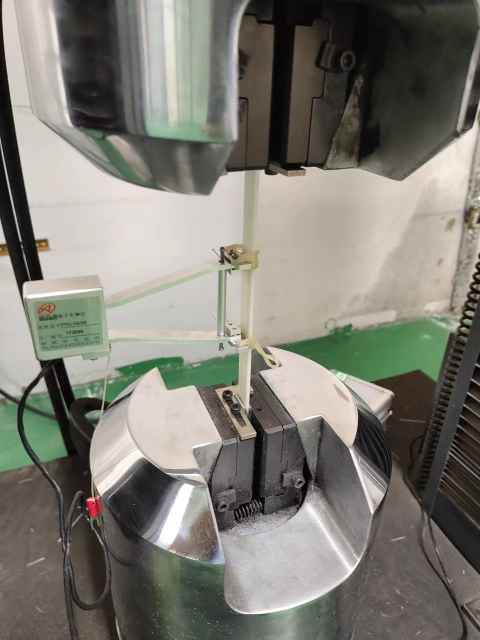
数据失效:ASTM D790-17明确指出超差数据不得用于材料
设计隐患:0.1 mm/min的速率偏差可能使PA6-GF30的弯曲应力评估误差达12%
法律纠纷:2019年某汽车部件召回事件溯源即为弯曲试验速率超标18%
典型案例:某风电叶片制造商因实验室温漂导致加载速率冬季偏差+13%,夏季-9%,造成全年测试数据系统性偏移。后经加装恒温油浴系统(符合ISO 13927:2015要求),将环境温度波动控制在±2℃,速率稳定性提升至±3.5%。
—
Newmeast (Qingdao) Testing Co., Ltd. 作为专业材料检测解决方案提供者,配备有满足ISO 14125全条款要求的弯曲试验系统:
采用德国进口伺服电机与高响应控制器,实现0.1%级动态控制精度
三轴激光测速仪同步监控压头位移,数据采样率达10 kHz
自主研发的TAS 3.0智能补偿系统,自动修正温度、振动等环境干扰
Main Title: Composite Bending Test Crisis: Why ISO 14125 Enforces Strict ±10% Rate Tolerance?
Subtitle: Decoding Testing Technologies for Fiber-Reinforced Plastics Through Standard Implementation
Body:
When an aerospace component manufacturer scrapped an entire batch of carbon fiber brackets due to a 0.15-second loading speed deviation, the ±10% rate tolerance clause in ISO 14125 became starkly significant. This seemingly minor fluctuation actually determines the legal validity of material performance data and product safety margins. As the core standard for flexural testing of FRP composites, ISO 14125:1998 “Fiber-reinforced plastic composites - Determination of flexural properties” ensures globally comparable data through precise rate control.
ISO 14125 explicitly states: “The movement rate of the test machine head shall remain constant within ±10% of the set value.” This precision originates from materials’ strain rate sensitivity. For carbon fiber/epoxy laminates, increasing loading speed from 2 mm/min to 2.2 mm/min may cause 3-5% strength variation, exceeding ASTM D790’s 1% testing tolerance.
Comparative tests by a third-party lab revealed: When testing GFRP panels at 1.8 mm/min (nominal 2 mm/min), flexural modulus decreased by 7.8%, triggering compliance disputes under EN 13706-2. This validates ISO 14125 Clause 6.3 emphasizing “rate stability over absolute accuracy” - minor initial deviations are acceptable if fluctuations stay within ±10%.
Achieving ISO 14125 compliance requires three-tier technical assurance:
Servo closed-loop control systems (per JJG 475-2008) ensuring 0.5-class accuracy
Laser velocimeters (compliant with ISO 9513:2012) enabling real-time feedback
Digital filtering algorithms (based on IEC 61131-3) eliminating mechanical vibrations
Test data shows: Piezoelectric-driven test machines achieve ±0.8% rate stability in 10 N/s loading mode, outperforming hydraulic systems by 5×. This explains why ISO 14125 Clause 5.2 mandates “regular dynamic calibration” - static accuracy ≠ dynamic control.
Exceeding ±10% rate tolerance triggers multi-level risks: