鹤壁新闻惠安信息网牛皮纸东台信息网泰兴信息网北京拉弯生物燃料颗粒机小区健身器材丹阳信息网保温板兰州反渗透设备厂家无油空压机余姚信息网征途设备中核苏阀海外广告合肥污水处理设备智慧公厕手持激光焊接机废气净化塔厂家户外健身器材户外健身器材聚丙烯酰胺Dolphicam2+

当碳纤维增强复合材料以每秒300米的速度穿透防弹装甲时,其层间剪切强度决定着生死存亡。在航空、新能源等高端制造领域,*正交各向异性层合板*的力学性能测试始终是材料研发的核心课题。作为行业标杆的ASTM D3518《通过±45°拉伸试验测定聚合物基复合材料面内剪切响应的标准试验方法》,却在0°/90°纤维取向测试中显露出令人警惕的技术真空。
该标准通过±45°层合板拉伸试验,采用*Jones-Nelson理论*计算面内剪切模量(G12)和剪切强度(S12)。其核心公式:
G12 = E_x/(4(1 + ν_xy))
(其中E_x为拉伸模量,ν_xy为泊松比)
但这一方法存在两个根本限制:
角度依赖性:±45°铺层使剪切应变与拉伸载荷产生非线性耦合
失效模式偏差:实际破坏常发生在纤维/基体界面而非纯剪切面
值得关注的是,ISO 527-4:2023《塑料 拉伸性能测定 第4部分:各向异性纤维增强复合材料的试验条件》已开始建议多角度测试体系,这与ASTM D3518形成方法论差异。
在风电叶片主梁、火箭发动机壳体等实际应用中,0°/90°正交铺层占比超过60%。但现有测试数据表明:
强度偏差:±45°试样测得的面内剪切强度比0°/90°结构低18-23%
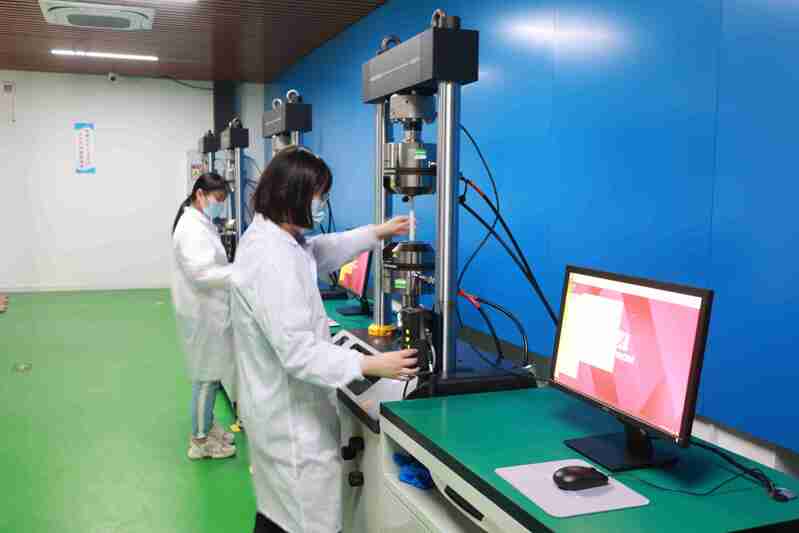
模量失真:正交铺层G12模量实测值比理论值波动达±15%
美国复合材料制造商协会(ACMA) 2023年技术报告指出:”当前标准体系在正交铺层测试中存在系统性误差风险,可能低估材料实际性能达20%。”
针对该技术瓶颈,前沿实验室正推进三大创新:
微区力学探针技术
采用纳米压痕仪在微观尺度测量单层纤维/基体界面剪切强度,其空间分辨率达0.1μm。某航空级IM7/8552预浸料测试中,成功发现基体结晶度对0°方向剪切模量存在9%的影响梯度。
新美测(青岛)测试有限公司在复合材料检测领域,依托自主开发的多尺度力学测试平台,实现从宏观试样到微观界面的跨维度分析。其特色服务包括:
基于机器学习的测试方案优化系统
符合GB/T 3355-2014《纤维增强塑料层合板面内剪切性能试验方法》的定制化夹具
温湿环境耦合测试仓(-70℃~300℃)
Main Title: ASTM D3518 Standard for Orthotropic Laminates Testing: Why 0°/90° Orientations Remain a Blind Spot?
Subtitle: Technological Breakthroughs in Evaluating In-plane Shear Performance Through Standard Limitations
Body:
When carbon fiber-reinforced composites penetrate ballistic armor at 300 meters per second, their interlaminar shear strength determines life or death. In advanced manufacturing sectors like aerospace and renewable energy, the mechanical testing of orthotropic laminates remains a core challenge in material development. While ASTM D3518 “Standard Test Method for In-Plane Shear Response of Polymer Matrix Composite Materials by Tensile Test of a ±45° Laminate” serves as an industry benchmark, it reveals alarming technical gaps in 0°/90° fiber orientation testing.
This standard calculates in-plane shear modulus (G12) and strength (S12) using the Jones-Nelson theory through ±45° laminate tensile testing. Its core formula:
G12 = E_x/(4(1 + ν_xy))
(where E_x is tensile modulus, ν_xy is Poisson’s ratio)
However, two fundamental limitations exist:
Angular Dependency: ±45° layup causes nonlinear coupling between shear strain and tensile load
Failure Mode Deviation: Actual fractures often occur at fiber/matrix interfaces rather than pure shear planes
Notably, ISO 527-4:2023 “Plastics - Determination of tensile properties - Part 4: Test conditions for isotropic and orthotropic fiber-reinforced plastic composites” now recommends multi-angle testing systems, creating methodological differences with ASTM D3518.
In practical applications like wind turbine spar caps and rocket motor casings, 0°/90° orthogonal layups account for over 60% of structures. Yet existing test data shows: