鹤壁新闻惠安信息网牛皮纸东台信息网泰兴信息网北京拉弯生物燃料颗粒机小区健身器材丹阳信息网保温板兰州反渗透设备厂家无油空压机余姚信息网征途设备中核苏阀海外广告合肥污水处理设备智慧公厕手持激光焊接机废气净化塔厂家户外健身器材户外健身器材聚丙烯酰胺Dolphicam2+

高温环境下的纤维增强塑料性能测试,是材料科学领域的核心课题之一。 然而,在实际检测中,部分实验室因操作流程简化或设备限制,未严格执行GB/T 3355-2014《纤维增强塑料高温拉伸性能试验方法》中规定的快速冷却步骤。这一疏漏可能导致测试数据失真,甚至影响材料在航空航天、新能源汽车等领域的可靠性评估。
GB/T 3355-2014明确规定,纤维增强塑料的高温拉伸测试需在试样达到设定温度后,通过*快速冷却装置*在10秒内将温度降至室温,随后立即进行力学性能测试。该步骤的核心目标在于模拟材料从高温工况到常温环境的瞬时变化,捕捉其微观结构(如树脂基体与纤维界面)在热应力作用下的响应特性。
研究表明,若省略快速冷却步骤,试样在自然冷却过程中可能发生树脂重结晶或纤维松弛,导致拉伸强度、弹性模量等关键参数偏离真实值。例如,某实验室对比实验显示,未执行快速冷却的试样拉伸强度平均降低8%-12%,断裂延伸率误差高达15%。
微观结构失真:缓慢冷却使树脂分子链重新排列,削弱纤维与基体的界面结合力,直接影响材料承载能力。
数据可比性缺失:不同实验室因冷却速率差异,导致测试结果无法横向对照,违背GB/T 1446-2020《纤维增强塑料性能试验方法总则》中关于试验条件一致性的要求。
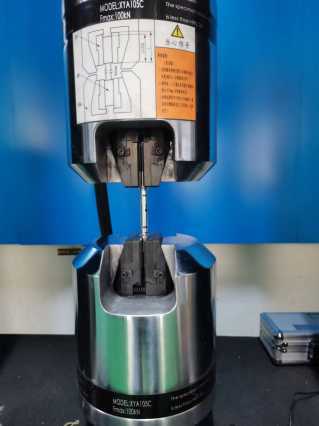
工程应用隐患:以风电叶片为例,若材料高温性能数据失真,可能导致叶片在极端温差环境下出现分层或断裂。
“快速冷却是高温拉伸测试中不可替代的‘时间锁’,它确保了材料性能定格在高温暴露瞬间的状态。”——引自《复合材料检测技术白皮书》(2022)
为实现GB/T 3355-2014的严苛要求,先进实验室已采用以下技术方案:
液氮喷射系统:可在5秒内将试样从300℃冷却至25℃,符合ISO 527-5:2021《塑料 拉伸性能测定 第5部分:单向纤维增强复合材料的试验条件》的冷却速率要求
红外热成像监控:实时跟踪试样表面温度梯度,确保冷却均匀性(参照ASTM E2582标准)
数据补偿算法:通过建立冷却速率-力学性能关联模型,修正设备误差带来的数据偏差
在纤维增强塑料检测领域,新美测(青岛)测试有限公司依托成熟的温控技术与数字化检测平台,为客户提供符合GB/T 3355、ISO 527-5等标准的全流程解决方案。实验室配备二级制冷压缩机组与高速数据采集系统,可实现±1℃的温控精度和0.01mm/min的位移分辨率,确保高温拉伸测试中快速冷却步骤的精准执行。
Main Title: The Impact of Omitted Rapid Cooling Steps in High-Temperature Tensile Testing for Fiber-Reinforced Plastics and Standardized Practices
Subtitle: Technical Analysis Based on GB/T 3355 and Optimization Strategies for Detection
Body:
High-temperature performance testing of fiber-reinforced plastics (FRPs) is a critical frontier in materials science. However, some laboratories fail to strictly implement the rapid cooling step mandated by GB/T 3355-2014 “Test Method for Tensile Properties of Fiber-Reinforced Plastics at Elevated Temperatures” due to simplified procedures or equipment limitations. This oversight risks distorting test data and compromising reliability assessments in aerospace and new energy vehicle applications.
GB/T 3355-2014 specifies that after reaching the target temperature, FRP specimens must be cooled to ambient temperature within 10 seconds using rapid cooling devices before mechanical testing. This step simulates instantaneous thermal transitions in real-world applications, capturing microstructural responses (e.g., resin-fiber interface behavior) under thermal stress.
Studies confirm that natural cooling allows resin recrystallization and fiber relaxation, causing deviations in tensile strength (8%-12% underestimation) and elongation at break (up to 15% error). For instance, a comparative experiment showed that specimens cooled naturally exhibited reduced interfacial bonding efficiency, directly affecting load-bearing capacity.