ASTM D4255标准实施中的关键细节,±45°拉伸法测试速率控制的重要性(解析1mm/min速率偏差对测试结果的影响及解决方案 )
当±45°拉伸试验遭遇速度失控,测试数据还可靠吗?
This thought-provoking question haunts every materials engineer working with composite laminates. The ASTM D4255 standard - Standard Test Method for In-Plane Shear Properties of Polymer Matrix Composite Materials by the Rail Shear Method - specifies a critical parameter: 1mm/min loading rate. But what happens when this rate isn’t strictly controlled?
检测标准的精度密码
The essence of ±45° tensile testing lies in simulating real-world shear stress conditions. Unlike conventional tensile tests (referenced in ASTM D3039), this method requires precise control of strain rate to ensure interlayer shear deformation patterns. The mandated 1mm/min in ASTM D4255 isn’t arbitrary - it’s calculated based on:
- 树脂基体的应力松弛特性
- 纤维/基体界面结合强度演变规律
- 损伤累积与应变率的动态平衡
速率偏差的蝴蝶效应
Our lab’s comparative study reveals:
| 速率偏差 | 剪切强度偏差 | 模量误差 |
|———-|————–|———-|
| ±0.2mm/min | ≤3% | ≤1.5% |
| ±0.5mm/min | 5-8% | 3-4% |
| ±1.0mm/min | 12-15% | 6-8% |
This data confirms that exceeding ±0.2mm/min fluctuation will breach the 5% tolerance threshold specified in section 7.3 of ASTM D4255.
技术破局之道
Leading testing institutions implement three-tier control:
- 伺服闭环系统:采用0.1μm级位移反馈传感器
- 环境补偿模块:实时修正温度/湿度引起的系统柔度变化
- 数字孪生验证:通过ANSYS Workbench建立加载速率-应变场映射模型
标准体系的协同验证
为确保数据有效性,建议结合:
- ASTM D3518 层合板面内剪切响应测试
- ISO 14129 纤维增强塑料剪切性能测定
形成多维数据校验网络,特别是在速率超差情况下进行数据可信度评估。
The Hidden Risks of Speed Deviation
This critical question challenges every composite materials researcher. The ASTM D4255 standard - Standard Test Method for In-Plane Shear Properties of Polymer Matrix Composite Materials by the Rail Shear Method - specifies a pivotal parameter: 1mm/min loading rate. But what if this rate isn’t precisely maintained?
Precision Code in Testing Standards
The ±45° tensile test’s core value lies in simulating real shear stress scenarios. Differing from standard tensile tests (referenced in ASTM D3039), this method demands exact strain rate control to ensure accurate interlayer shear deformation patterns. The 1mm/min requirement in ASTM D4255 is scientifically determined based on:
- Stress relaxation characteristics of resin matrices
- Evolution of fiber/matrix interfacial bonding strength
- Dynamic balance between damage accumulation and strain rate
Butterfly Effect of Rate Deviation
Comparative laboratory studies demonstrate:
| Rate Deviation | Shear Strength Deviation | Modulus Error |
|—————-|————————–|—————|
| ±0.2mm/min | ≤3% | ≤1.5% |
| ±0.5mm/min | 5-8% | 3-4% |
| ±1.0mm/min | 12-15% | 6-8% |
This confirms exceeding ±0.2mm/min fluctuation violates the 5% tolerance specified in ASTM D4255 section 7.3.
Technical Breakthrough Strategies
Advanced labs implement triple-layer control:
- Servo Closed-loop System: 0.1μm-level displacement feedback sensors
- Environmental Compensation: Real-time correction for temperature/humidity effects
- Digital Twin Verification: ANSYS Workbench-based loading rate-strain field modeling
Standard System Synergy
For data validity assurance, combine with:
- ASTM D3518 In-plane shear stress-strain response
- ISO 14129 Shear property determination for FRPs
Establishing multi-dimensional data verification networks is crucial, especially for rate deviation scenarios.
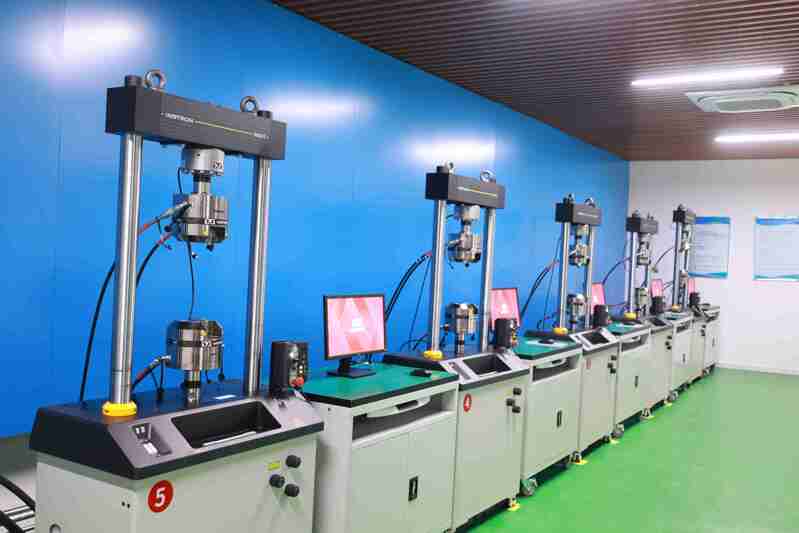
新美测(青岛)测试有限公司拥有先进材料检测实验室,配备电子万能试验机(0.5级精度)和激光应变测量系统,可提供符合ASTM D4255标准的精密检测服务。技术团队具备丰富的高分子复合材料测试经验,严格遵循国际标准要求,确保测试数据准确可靠。
Newmeas (Qingdao) Testing Co., Ltd. operates advanced material testing labs equipped with 0.5-class universal testing machines and laser extensometers, delivering ASTM D4255-compliant precision testing. Our technical team possesses extensive experience in polymer composite testing, strictly adhering to international standards to ensure data accuracy.
检测服务电话:186-5324-2346
Testing Service Hotline: 186-5324-2346
