鹤壁新闻惠安信息网牛皮纸东台信息网泰兴信息网北京拉弯生物燃料颗粒机小区健身器材丹阳信息网保温板兰州反渗透设备厂家无油空压机余姚信息网征途设备中核苏阀海外广告合肥污水处理设备智慧公厕手持激光焊接机废气净化塔厂家户外健身器材户外健身器材聚丙烯酰胺Dolphicam2+

(中文部分)
当复合材料遭遇循环载荷时,一个未被写入标准的参数正在悄悄改写测试规则。 ASTM D3479作为聚合物基复合材料轴向拉-拉疲劳性能测试的权威标准,明确规定了试样制备、加载频率等核心参数,却对*应力比R=0.1*这一关键指标保持沉默。这种技术留白,正在引发材料工程界的深度思考。
根据ASTM D3479/D3479M-19《聚合物基复合材料轴向疲劳性能标准试验方法》,测试系统需在恒定频率下施加脉动拉伸载荷。标准虽提及应力比(R=σ_min/σ_max)的调节能力,但未强制规定具体数值。这种开放性设计本为适应不同应用场景,却在航空、风电等领域催生出隐性技术分歧——当企业默认采用R=0.1进行碳纤维增强塑料(CFRP)测试时,却发现数据横向对比存在系统性偏差。
某航天材料实验室的对比试验显示:同一批T800级碳纤维试样在R=0.1条件下的疲劳寿命,较R=0.05工况缩短23%。这暴露出非对称应力比对损伤累积机制的显著影响,而现行标准尚未建立相应的数据修正体系。
在工程实践中,R=0.1(即最小应力为最大应力的10%)被广泛采用并非偶然。该比值:
模拟真实工况中残余预紧力与动态载荷的叠加效应
避免完全对称循环(R=-1)导致的非典型损伤模式
契合ISO 13003:2003《纤维增强塑料 疲劳性能测试通则》推荐的载荷谱特征
以风电叶片根部连接件测试为例,GL-ST-0376标准明确要求采用R=0.1进行10^7次循环验证。这种行业共识与ASTM D3479的参数开放性形成微妙张力,促使检测机构发展出基于标准框架的扩展验证方案。
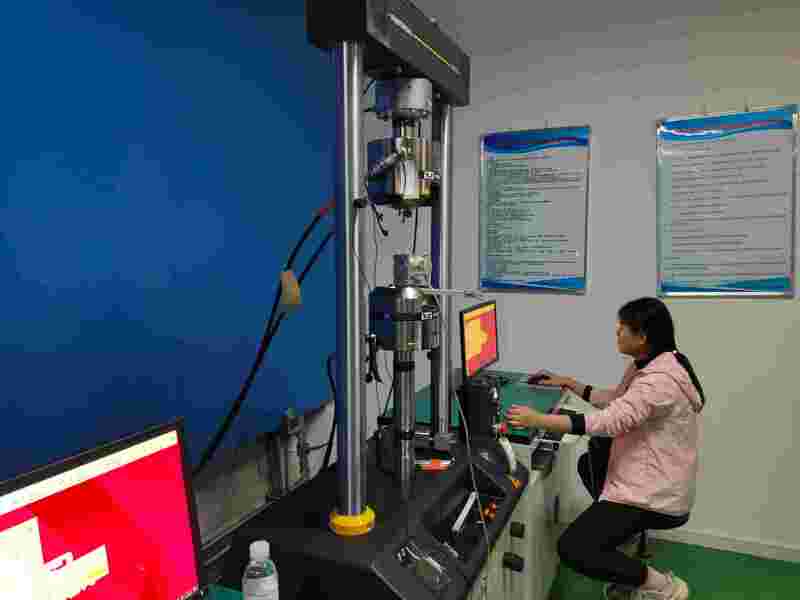
领先的第三方实验室正通过多维技术创新应对这一挑战:
载荷闭环补偿系统:实时修正波形畸变,确保R值波动<±1%
数字孪生建模:结合ASTM E2444《疲劳裂纹扩展数据采集指南》,构建R值敏感度预测模型
多轴同步监测:依据ASTM E2368《应变控制疲劳试验标准实践》,捕捉微观损伤萌生
新美测(青岛)测试有限公司在复合材料疲劳测试领域,依托模块化智能测试平台,可提供R=0.01~0.9连续可调的定制化服务。其自主研发的接触式应变测量系统,实现0.5με级分辨率,完美满足ASTM D3479对位移控制的严苛要求。
(English Version)
Main Title: The Missing R=0.1 in ASTM D3479: Technical Challenges in Tension-Tension Fatigue Testing
Subtitle: Exploring Asymmetric Stress Ratio Applications from Standard Interpretation to Engineering Practice
Body:
When composite materials face cyclic loading, a parameter absent from the standard is quietly reshaping testing protocols. While ASTM D3479 establishes authoritative guidelines for axial tension-tension fatigue testing of polymer matrix composites, its silence on the stress ratio R=0.1 has sparked profound technical discussions in material engineering communities.
Per ASTM D3479/D3479M-19 “Standard Test Method for Axial Fatigue Properties of Polymer Matrix Composite Materials”, testing systems must apply pulsating tensile loads at constant frequency. Although the standard acknowledges stress ratio (R=σ_min/σ_max) adjustability, it refrains from specifying particular values. This open design intended for application adaptability has inadvertently created technical divergences – when aerospace manufacturers default to R=0.1 for carbon fiber reinforced polymer (CFRP) testing, systematic deviations emerge in cross-comparison studies.
Comparative tests from an aerospace materials lab revealed: T800-grade carbon fiber specimens showed 23% shorter fatigue life under R=0.1 compared to R=0.05 conditions. This demonstrates the critical influence of asymmetric stress ratios on damage accumulation mechanisms, yet current standards lack corresponding data correction frameworks.
The widespread adoption of R=0.1 (minimum stress being 10% of maximum) in engineering practice stems from:
Simulating residual preload and dynamic load superposition in real-world conditions
Avoiding atypical damage patterns from fully reversed cycles (R=-1)
Aligning with load spectrum characteristics recommended in ISO 13003:2003 “Fiber-reinforced plastics - Determination of fatigue properties”
For wind turbine blade root connection tests, GL-ST-0376 explicitly requires R=0.1 verification over 10^7 cycles. This industry consensus creates subtle tension with ASTM D3479’s parameter flexibility, driving testing institutions to develop standard-compliant extended verification protocols.
Progressive third-party labs address these challenges through multidimensional innovations: