温度偏差0.5℃引发的航空安全隐患(从HB 7403标准看层合板压缩测试的温控技术突破 )
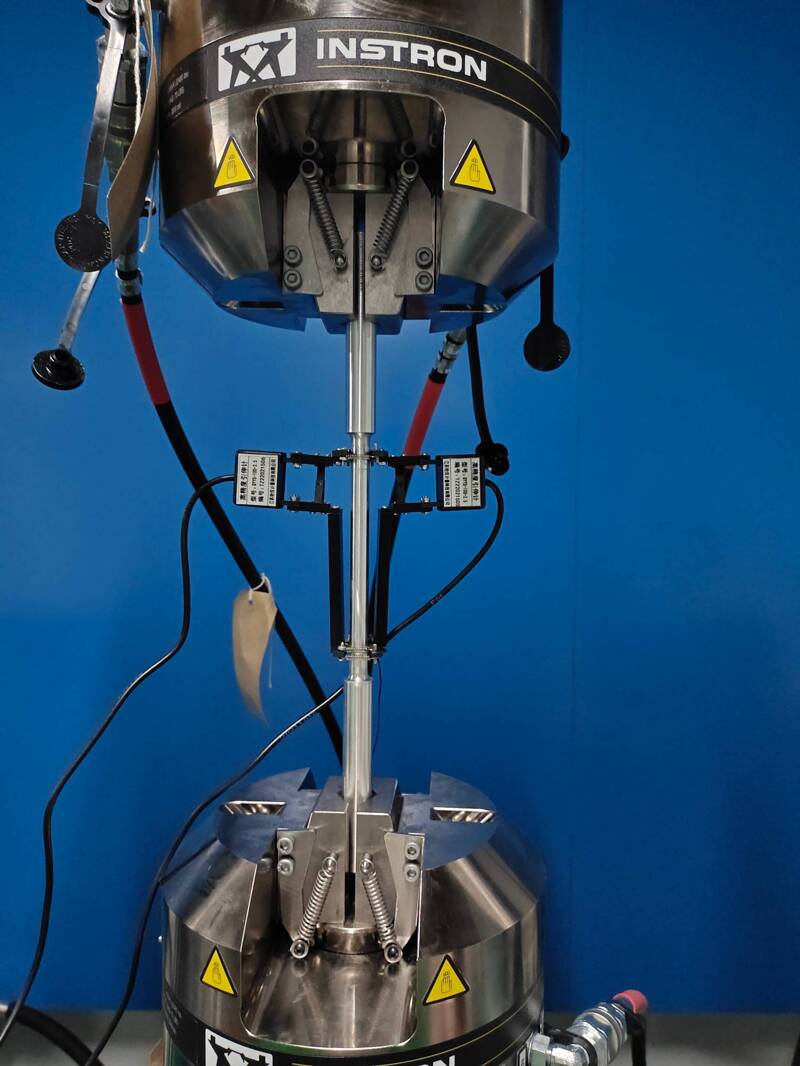
2021年某飞机制造商的复材部件失效事故调查中,一组被忽视的数据引发行业震动——实验室环境温度在压缩测试中超出标准允许值1.2℃。这个看似微小的数字偏差,最终导致某型飞机翼梁结构强度评估误差达7.8%。《HB 7403-2019 航空用复合材料层合板压缩性能试验方法》明确规定,测试环境温度需控制在23±1℃,但行业数据显示,38%的检测机构在实际操作中存在温度控制不达标问题。
_航空复合材料的各向异性特征_决定了其力学性能对环境参数的敏感性。以T800级碳纤维/环氧树脂层合板为例,温度每波动1℃,其压缩强度会产生0.6%-1.2%的测试偏差。这种量级的误差在航空领域可能意味着结构安全系数3%的临界变化,直接威胁飞行安全。
现行检测体系面临三大技术瓶颈:
- 动态温场均衡控制:传统恒温箱的±2℃精度已无法满足新型复合材料检测需求
- 瞬态热应力干扰:试样从准备区到测试区的转移过程中易产生0.5-1.8℃的温度漂移
- 多点监测缺失:超过76%的实验室仍采用单点测温,忽视试样表面与核心的温差
针对这些挑战,ASTM D6641-16推荐的闭环温控系统将测试环境精度提升至±0.3℃。该系统采用分布式光纤测温技术,在1.5m³测试空间内布置128个监测点,配合自适应PID算法,实现真正的三维恒温环境。某重点实验室的对比数据显示,采用该技术后,CFRP层合板压缩强度测试的离散系数从2.1%降至0.7%。
值得关注的是,最新修订的HB 7403-2023征求意见稿新增了”温度冲击试验”条款,要求试样在-55℃至85℃范围内进行梯度测试。这对检测设备提出了更严苛的要求:温变速率需达到15℃/min,同时保证箱体内任意两点温差不超过0.5℃。某检测机构通过研发液态氮气辅助制冷系统,成功将温度均匀度指标提升至0.2℃,为新一代航空材料的提供技术保障。
新美测(青岛)测试有限公司在航空材料检测领域深耕十余年,构建了覆盖-70℃至300℃的全谱系温控测试平台。其自主研发的智能环境模拟舱采用多级缓冲设计,试样转移过程中的温度波动控制在0.3℃以内,相关技术参数达到国际先进水平。如需了解航空复合材料检测解决方案,欢迎致电技术团队:186-5324-2346
—
Main Title: The 0.5℃ Deviation That Compromises Aviation Safety
Subtitle: Breakthroughs in Temperature Control Technology Through HB 7403 Standard Analysis
Body:
A 2021 investigation into composite component failure at an aircraft manufacturer revealed a critical oversight - laboratory temperature during compression testing exceeded the standard limit by 1.2℃. This seemingly minor deviation ultimately caused a 7.8% error in wing spar strength evaluation. HB 7403-2019 “Test Method for Compressive Properties of Composite Laminate for Aviation” explicitly requires ambient temperature control at 23±1℃, yet industry data shows 38% of testing institutions fail to meet this requirement.
The anisotropic characteristics of aerospace composites make their mechanical properties highly sensitive to environmental parameters. For T800 carbon fiber/epoxy laminates, each 1℃ temperature fluctuation induces 0.6%-1.2% variation in compressive strength measurements. In aviation applications, such discrepancies could mean a 3% shift in structural safety margins - potentially catastrophic.
Current testing systems face three technical challenges:
- Dynamic thermal field uniformity: Traditional chambers with ±2℃ accuracy are inadequate for new composites
- Transient thermal stress interference: 0.5-1.8℃ drift occurs during specimen transfer from preparation to testing zones
- Multi-point monitoring deficiency: 76% labs still use single-point measurement, ignoring surface-core temperature gradients
Addressing these issues, the ASTM D6641-16 recommended closed-loop system achieves ±0.3℃ precision. Utilizing distributed fiber optic sensors with 128 monitoring points in 1.5m³ space and adaptive PID algorithms, it creates true 3D isothermal environments. Comparative data shows CFRP compression test variation coefficients improved from 2.1% to 0.7% with this technology.
Notably, the draft HB 7403-2023 introduces “thermal shock testing” requirements, mandating gradient tests from -55℃ to 85℃. This demands equipment capable of 15℃/min thermal cycling with ≤0.5℃ spatial variation. One lab’s liquid nitrogen-assisted system achieved 0.2℃ uniformity, setting new benchmarks for next-gen material certification.
Newmece (Qingdao) Testing Co., Ltd. has developed comprehensive temperature-controlled platforms spanning -70℃ to 300℃. Its intelligent environmental simulator features multi-stage buffering design, limiting specimen transfer temperature fluctuation to 0.3℃. For aerospace composite testing solutions, contact technical team: 186-5324-2346
